

SHARE
RELATED SERVICES
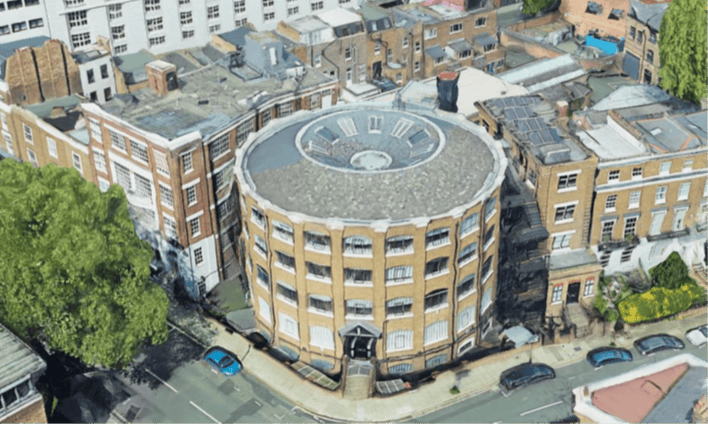
Modelling plays a crucial role in refurbishment projects. It helps us understand how a building will perform in terms of energy, indoor climate and daylight before any construction begins.
For the project team, this means:
- Early design decisions backed by data ensure better decision making
- Optimised energy use, helping projects to meet sustainability targets like NABERS, BREEAM, WELL or LEED
- Reduced operational associated costs
- Improved thermal and visual comfort for occupants increasing productivity
- Avoiding costly design changes later in the process – enabling a reduction in capital costs and time required for design
Why thermal modelling is more challenging in refurbishment projects
However, due to the nature of refurbishment projects, thermal modelling can present more challenges compared to new builds.
Complex and irregular geometries: Existing buildings often have fragmented layouts and varied floor heights. These can make thermal zoning more complicated and reduce the accuracy of energy modelling.
Uncertain construction details: As-built information is often incomplete or outdated. Key thermal characteristics like insulation levels, air permeability, and thermal bridging may be unknown or vary widley across the building.
Limited access to as-built drawings: In refurbishment projects, especially older buildings, accurate and up-to-date architectural and mechanical drawings are often missing, incomplete, or outdated. This creates uncertainty in key thermal modelling inputs such as:
- Wall and roof construction build-ups
- Insulation levels and continuity
- Glazing specifications
- Structural elements
- Without this information, modellers must make assumptions or rely on site surveys and partial data, which increases the risk of error and may reduce the reliability of the model unless validated carefully
Structural constraints make it harder to retrofit ideal solutions: Older or existing buildings often have physical limitations that prevent the application of modern best-practice energy strategies. For example:
- Limited space in ceiling or floor voids may restrict ductwork routes or prevent the addition of insulation or cooling systems
- Protected façades (e.g., in heritage buildings) might not allow for double-glazing or external shading devices
- Load-bearing walls and columns may block the optimal placement of services or impact control of HVAC
- Existing layouts might not support open-plan passive design strategies like cross-ventilation or natural daylighting
It’s therefore important to work within these constraints when carrying out modelling to find realistic, site-specific solutions that balance performance goals with what’s physically possible.
Overcoming thermal modelling challenges in existing buildings
Despite the complexities of refurbishing an existing building particularly one with limited documentation and structural constraints, there are several solutions to addressing the challenges presented.
Detailed Site Surveys and Investigations: In the absence of reliable as-built drawings, thorough site visits should be conducted to gather critical data on construction build-ups, glazing, and existing services. In this way we can reduce modelling uncertainties and make informed assumptions where necessary (for example based on the age of the building and the building regulations that were applicable by the time of construction).
Use of Flexible Modelling Tools: Use of advanced modelling software such as the IESVE or Rhino-Grasshopper which are capable of handling irregular geometries and fragmented zones. This enabled accurate thermal zoning and allowed us to test multiple scenarios within the spatial constraints of the existing layout.
Close Collaboration Across Disciplines: Always work closely with architects, structural engineers, and MEP consultants to identify feasible retrofit strategies that take into account the building’s physical and heritage limitations. This will ensure that proposed interventions, like mechanical ventilation or solar control glazing, could be implemented.
Scenario Testing for Retrofit Options: Model and compare a variety of passive and active design strategies. This iterative process can help identify solutions with the best balance in terms of energy performance, capital cost, and applicability.
Robust Validation and Sensitivity Analysis: Where input data are uncertain, a sensitivity analysis and benchmarking against similar buildings should take place based on validated assumptions. This increase confidence in the model outcomes and informed key design decisions.
Focus on Passive Solutions / Measures First: To minimise reliance on complex active systems, always prioritise passive strategies like thermal mass utilisation, solar control glazing, solar shading and improved insulation. These were particularly valuable in a building with limited space for new systems.
By combining technical expertise, collaborative problem-solving, and a performance-led approach, energy teams can successfully overcome typical challenges and predict how an existing building will perform.
Thermal modelling in practice: Camden Works
Camden Works in London is a great example of a refurbishment project where thermal modelling has played a key role in enhancing the energy performance and occupier comfort of the design process.
As part of the project’s sustainability strategy, Verte, working closely with QOB, delivered a comprehensive range of energy thermal and daylight modelling to support BREEAM RFO 2014 certification, including:
- Passive Design Analysis
- Low and Zero Carbon Feasibility Study
- Daylight Modelling
- Thermal Comfort Assessment
- EPC production and support to achieve a minimum B rating
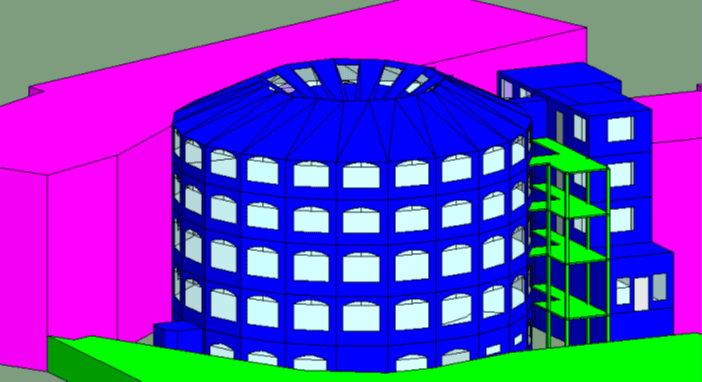
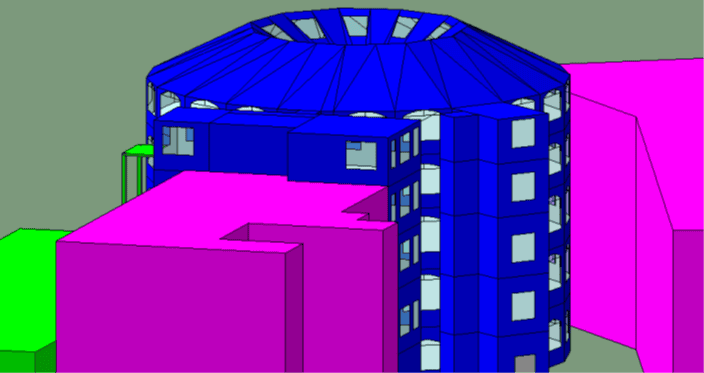
This resulted in the following positive contributions to the project:
- Passive design strategies – including enhanced insulation, solar control glazing and effective thermal mass – led to a projected 26% reduction in energy demand and nearly 29% reduction in carbon emissions.
- Air Source Heat Pumps were selected over PV panels as the primary low-carbon technology due to their significant 59.6% reduction in regulated carbon emissions, securing compliance with BREEAM ENE 04.
- Thermal comfort modelling confirmed compliance with both current and future climate scenarios, supported by design measures including the use of highly reflective internal roller blinds in south and southwest facing rooms to reduce overheating (installed by the landlord / tenant team).
- The daylighting strategy ensures over 60% of occupied spaces meet BREEAM visual comfort requirements, enhancing both energy savings and occupant wellbeing.
- Mechanical ventilation with heat recovery was selected to maintain indoor air quality while supporting noise control and thermal regulation.
If you would like to understand how your building will perform from an energy, indoor climate and daylight perspective before any construction begins, contact us at hello@verteltd.com.
AUTHOR

Christos Kollias
Senior Energy & Carbon Consultant
"*" indicates required fields